
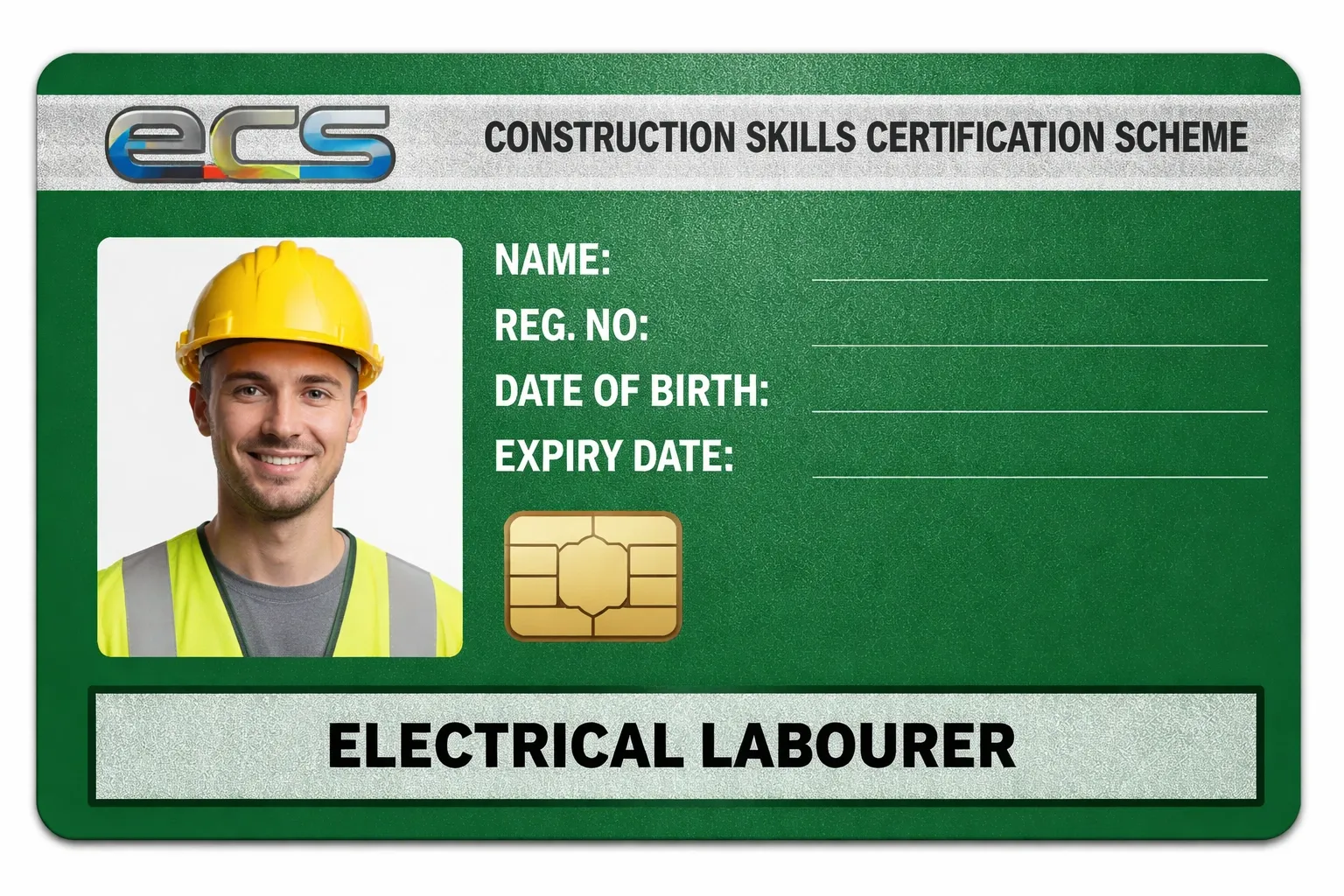
The ECS Electrical Labourer Card is an essential certification for individuals who want to start a career in the electrical industry. It proves that you have the basic knowledge, qualifications, and health and safety awareness required to work safely on construction sites.
Whether you are new to the industry or planning to switch careers, this guide explains everything you need to know about the ECS Electrical Labourer Card.
What is an Electrical Labourer Card?
The ECS Electrical Labourer Card is issued under the Electrotechnical Certification Scheme (ECS). It is designed for workers who assist electricians but are not fully qualified electricians themselves.
This card confirms that you:
- Understand basic electrical safety practices
- Meet industry standards
- Can work safely under supervision
As a result, employers trust cardholders for entry-level electrical roles.
Who needs an ECS Electrical Labourer Card?
You should apply for this card if you:
- Work as an electrical labourer or mate
- Assist electricians on-site
- Are starting a career in the electrical field
- Do not yet hold a full electrical qualification
In addition, many construction sites require an ECS card before allowing access.
Eligibility Requirements
To apply for the ECS Electrical Labourer Card, you must meet certain criteria.
1. Health and Safety Qualification
You must complete an approved Health and Safety course. This ensures that you understand workplace risks and safety procedures.
2. Relevant Occupation
You should be working or planning to work as an electrical labourer.
3. Identity Verification
Valid identification documents are required during the application process.
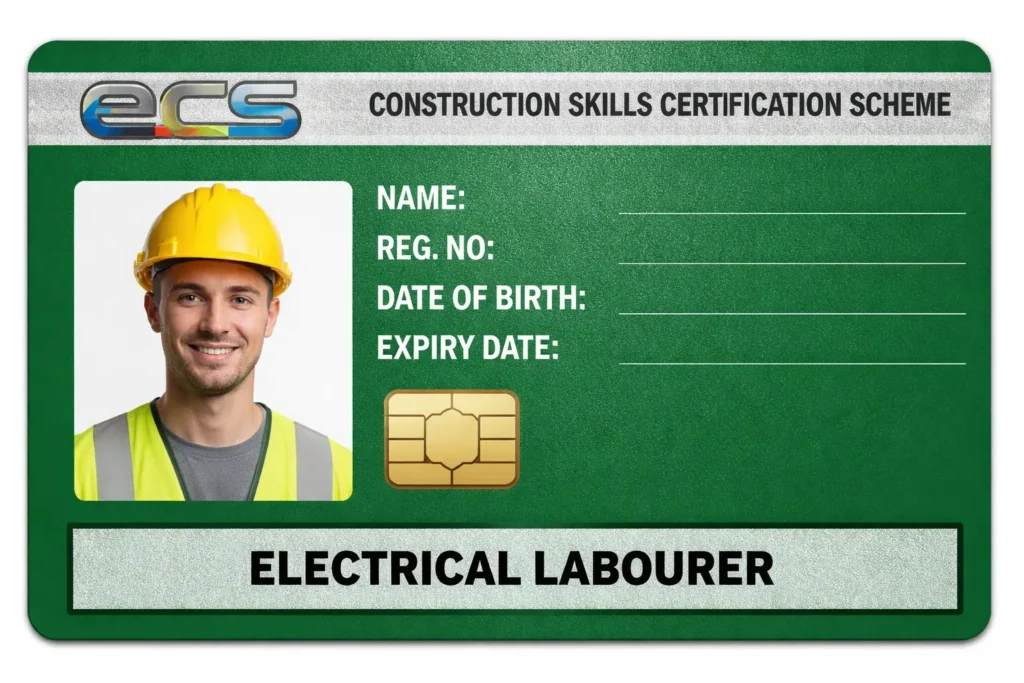
How To Apply For an ECS Electrical Labourer Card
Step 1: Complete Your Required Training
Before you can hold the card, you must prove you understand the safety stakes of the industry.
- Health, Safety and Environment (HS&E) Assessment: Most applicants must pass the official ECS HS&E Test. It ensures you can identify site hazards and understand safety protocols.
- Qualification Check: Depending on the card type (eg: Gold Card, Trainee, Labourer), you’ll need specific certificates like an NVQ Level 3, the latest 18th Edition Wiring Regulations(BS 7671) or a relevant apprenticeship completion certificate.
- Exemptions: Check if your existing qualifications (like a recent degree or specific safety certificates) exempt you from the HS&E Test.
Step 2: Create an ECS Account
Your digital profile is the “brain” of your application.
- Registration: Head to the MyECS portal. You will need a valid email address and personal details to set up your profile
- Card Selection: Use the “card finder” tool on the website. It’s vital to select the specific card that matches your current grade and qualification to avoid a rejected application.
- Digital Access: Once registered, you can track your personal progress and manage renewals through the MyECS app.
Step 3: Submit Application
This is where precision is key. Missing a single scan can delay your card by weeks.
- Document Digitization: Scan your original qualification certificates, your HS&E pass notification, and a high-resolution, passport-style photo against a white plain background.
- Employer Endorsement: If you are applying for a specific grade, you may need a digital signature or a signed statement from your employer confirming your experience.
- Data Verification: Ensure your name matches your ID exactly. Discrepancies between your certificates and your account name are a common cause for administration holds.
Step 4: Pay The Fee
The application won’t move into the “Assessment” phase until the balance is cleared.
- Standard Pricing: Fees generally range between £40 and £50 plus VAT, though prices can vary based on whether you are an individual applicant or a part of JIB member company.
- Fast-Track Options: If you are in a rush for a new site start, check for “Premium” or “Fast Track” processing services, which may be available for an additional charge.
- Payment Methods: Most major credit/debit cards are accepted through the secure online portal.
Step 5: Receive Your Card
The final step involves the physical production and delivery of your credentials.
- Verification Period: The ECS team manually checks your documents against national databases. This typically takes 7 to 14 days, though peak seasons may be longer.
- Virtual Card: While waiting for the plastic to arrive, you can often access a “Virtual Card” via the MyECS app, which is valid for site entry.
- Delivery: Your physical card is dispatched via standard post to the address provided. Ensure your mailbox is secure, as this card is valuable professional document.
Cost of the ECS Electrical Labourer Card
The cost of the ECS card may vary slightly depending on the application type. However, you should expect to pay:
- Application fee
- Training course fee
The total cost of the card comes out to be £57.80 (including VAT). Although there is a cost involved, the card significantly improves your job opportunities.
Benefits of the ECS Electrical Labourer Card
Getting an ECS Electrical Labourer Card offers several advantages.
- Better Job Opportunities: Holding an ECS Card transforms you from a general job seeker into a site-ready professional, as major contractors and recruitment agencies use the card as a mandatory filter to ensure they are hiring individuals who can be deployed to high-valued JIB-regulated projects immediately.
- Proof of Competence: The card serves as an official endorsement of your safety literacy, verifying that you have passed the industry-standard Health, Safety & Environment Assessment and have had your identity and basic qualifications vetted by a central authority.
- Site Access: Because the ECS card is the only industry-recognized equivalent to the CSCS Card for electrical work, it is non-negotiable requirement for gaining entry to most UK construction sites, where site managers use its embedded technology to confirm your insurance and safety compliance instantly.
- Career Progression: The Labourer Card acts as your professional foundation, allowing you to gain on-site experience and establish a MyECS digital profile that makes the eventual transition to a Trainee or Gold Card status much faster as you gain high-level NVQ qualifications.
How Long is the ECS Electrical Labourer Card Valid?
The ECS Electrical Labourer Card is typically valid for three years. After that, you must renew it to continue working on-site without interruptions.
JIB-approved electrical theory qualifications at Level 2 or 3
- City & Guilds 2330 Certificate in Electrotechnical Technology (Level 2 or 3)
- City & Guilds 236 or 2360 Part 1 or 2
- City & Guilds 2351 (Units 1, 2, 3 & 4)
- City and Guilds 2365-02 Level 2 Diploma in Electrical Installation (Buildings and Structures) (600/5498/0) or Level 3 (600/5499/2)
- City and Guilds 8202-20 Level 2 Technical Certificate in Electrical Installation (Tecbac) (603/0228/8) or Level 3 (601/7307/5)
- Unit Accreditation of C&G 2356 – Electrotechnical Services
- Unit Accreditation of C&G 2357 Diploma in Installing Electrotechnical Systems and Equipment
- Unit Accreditation of C&G 5357 Level 3 Electrotechnical Qualification
- EAL Diploma in Electrotechnical Services (Units 1,2,3,4,5 & 6)
- EAL Level 2 Diploma in Electrical Installation (QCF) (600/6724/X) or Level 3 Diploma (601/7307/5)
- EAL Level 2 Intermediate Diploma in Electrical Installation (601/4561/4)
- EAL Level 3 Diploma in Electrical Installation (QCF) (600/9331/6)
- Unit Accreditation of EAL NVQ Diploma in Installing Electrotechnical Systems and Equipment
- T Levels in Building Services Engineering, Construction pathways, or Engineering pathways