
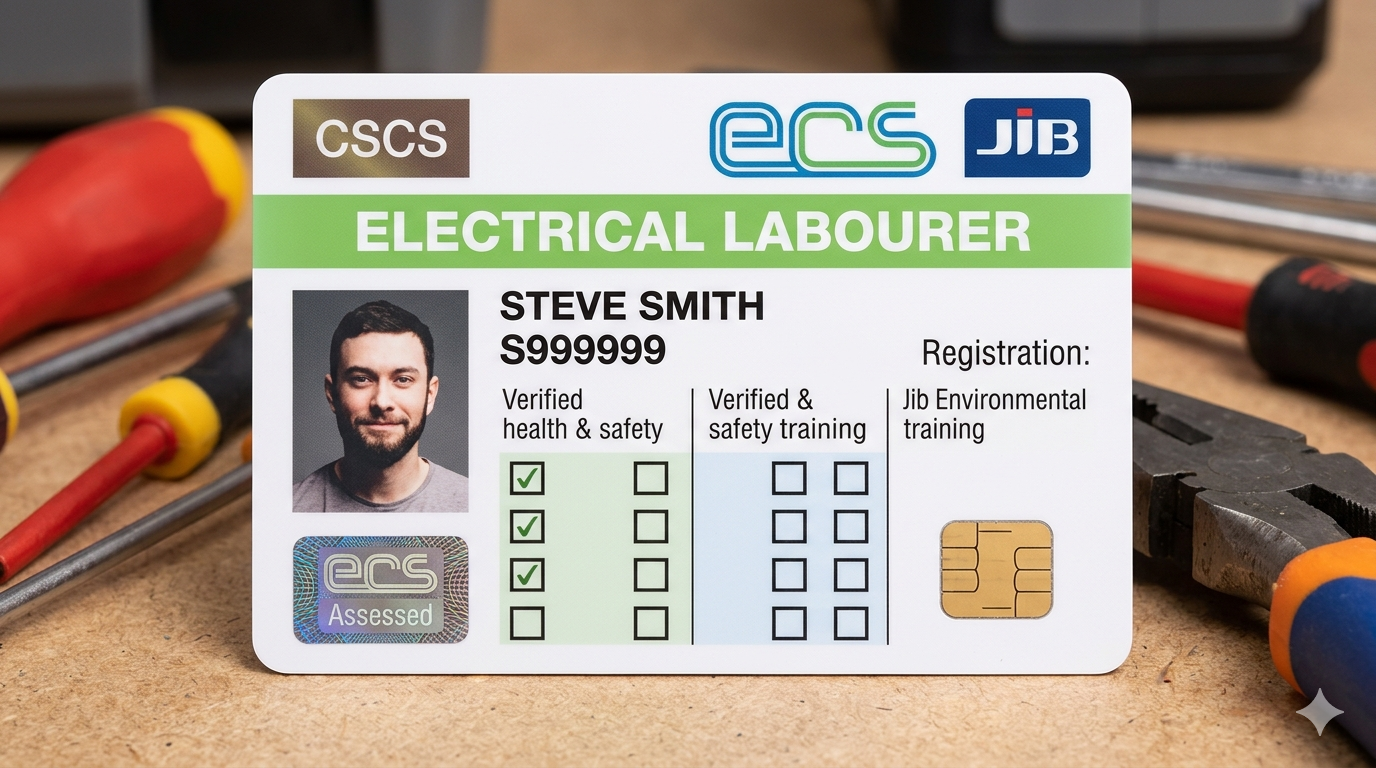
If you work in the UK electrical sector, you already know that proving your skills is the key to securing work. The Electrotechnical Certification Scheme (ECS) serves a the primary system for verifying the qualifications, identity and health and safety awareness of electrotechnical workers across the UK. Partnered with the Construction Skills Certification Scheme (CSCS), an ECS card acts as your mandatory “site support” to access commercial and industrial projects. The industry is undergoing significant regulatory changes this year. Therefore, understanding how the scheme works will help you keep your credentials valid and your career on track.
Why The Electrotechnical Certification Scheme Matters
The primary purpose of the ECS is to maintain high safety and professional standards. Because electrical installation carries inherent risks, principal contractors require independent proof of competence before allowing anyone onto a job site.
The system benefits both workers and employers by:
Verifying Competence: It instantly demonstrates your training, qualification level, and specific job role to site managers.
Improving Site Safety: Every applicant must pass a health and safety assessment, which drastically reduces workplace accidents.
Unlocking Higher Pay: Holding a premium card tier, such as the prestigious JIB Gold Card, directly increases your earning potential.
Qualification Rules for the ECS
The Electrotechnical Assessment Specification (EAS) framework has tightened its qualification rules significantly. If you handle specific types of electrical work, you must adapt to these mandatory changes:
The End of “Experience-Only” EICRs: A strict deadline takes effect on October 1st, 2026. From this date, anyone conducting periodic inspection and testing (Electrical Installation Condition Reports) must hold an individual, formal Level 3 qualification alongside two years of recorded experience. Relying on a firm’s “Qualified Supervisor” is no longer enough.
Mandatory Low-Carbon Qualifications: The UK’s push toward Net Zero has created defined categories for renewable technologies. If you install Electric Vehicle (EV) charging points, solar photovoltaic (PV) systems, or Electrical Energy Storage Systems (EESS), you must hold technology-specific Level 3 certifications. Manufacturer short courses alone will no longer suffice.
BS 7671 Amendment 4: The 18th Edition Wiring Regulations are introducing Amendment 4 this year, focusing heavily on battery storage and power safety. You must update your Continuing Professional Development (CPD) records on your MyECS profile to reflect this standard.
Choosing the Right ECS Card Tier
The scheme accommodates individuals at every level of their professional journey. The most common card types include:
Apprentice / Trainee Cards: Designed for individuals currently enrolled in a recognized electrotechnical training program.
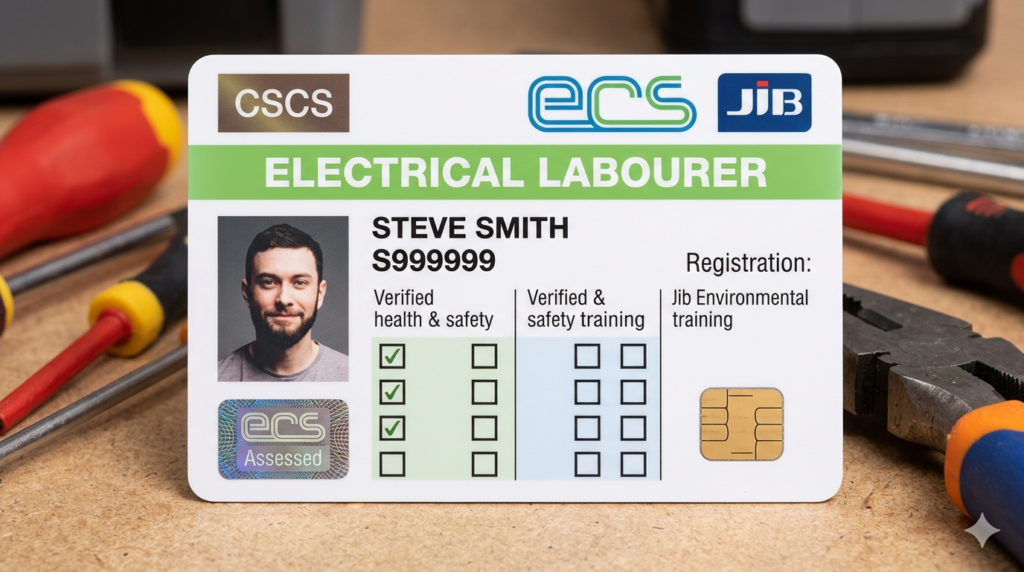
Electrical Labourer Card: Aimed at site support staff who assist qualified electricians but do not perform unsupervised installation work.
Installation / Approved Electrician (Gold Card): The industry benchmark that certifies a fully qualified professional who has completed an NVQ Level 3 and the AM2 practical assessment.
How To Apply For Your Card
Fortunately, the Joint Industry Board (JIB) provides a streamlined digital process through the MyECS portal.
First, you must book and pass the ECS Health, Safety and Environmental Assessment. This 30-minute test features 50 multiple-choice questions, and you must score at least 43 correct answers to pass. Second, log into your MyECS account and upload digital copies of your qualification certificates, your training records, and a professional photo. Finally, pay the application fee. A standard online card application costs £57.00, while the mandatory safety test costs £49.00 + VAT. By keeping your certifications updated and utilizing the digital portal, you can navigate the scheme efficiently and secure profitable contracts throughout 2026.