
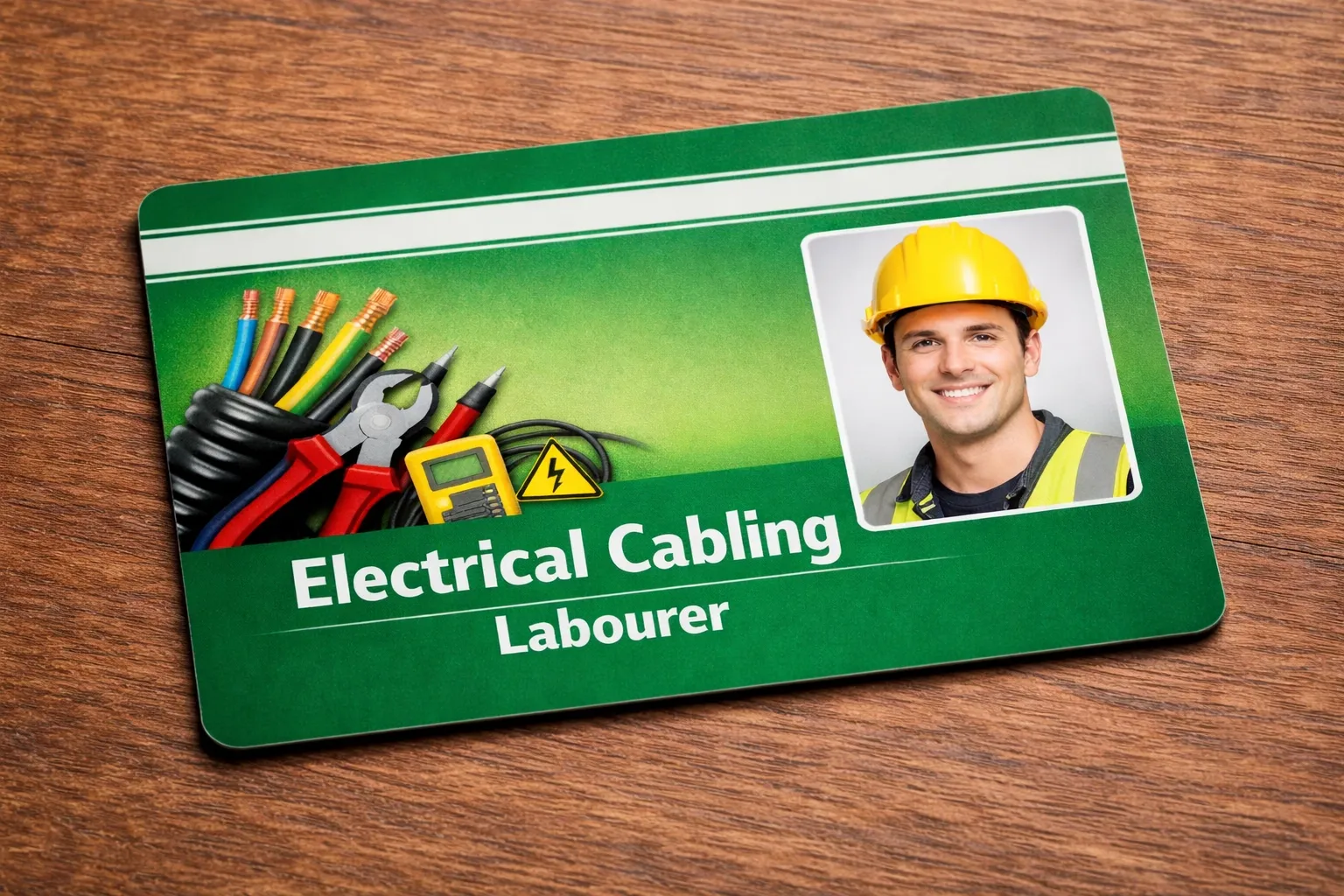
The ECS Electrical Cabling Card is an essential certification for individuals working in data, network, and communication cabling roles. It proves that you have the required skills, qualifications, and health and safety awareness to work safely in the electrotechnical industry.
Whether you are starting out or already working in cabling, this guide will help you understand everything about the ECS Electrical Cabling Card.
What is the ECS Electrical Cabling Card?
The ECS Electrical Cabling Card is part of the Electrotechnical Certification Scheme (ECS). It is specifically designed for individuals involved in installing and maintaining data, telecom, and structured cabling systems.
In simple terms, this card proves that you:
- Understand cabling systems and standards
- Follow health and safety regulations
- Meet industry requirements
Therefore, it acts as proof of your professional competence.
Who needs the ECS Electrical Cabling Card
You should apply for this card if you:
- Work as a data cabling engineer
- Install network or telecom systems
- Assist with fibre or structured cabling
- Want to enter the cabling industry
In addition, most construction sites require an ECS card for access. As a result, having this certification improves your job prospects.
Eligibility Requirements
To qualify for the this card, you must satisfy the following criteria:
1 . Recognized Cabling Certification
You need a relevant qualification in data cabling, telecommunications, or network installation.
2. Health and Safety Certification
You must complete an approved Health, Safety, and Environmental Awareness course.
3. Work Experience (if required)
Some roles may require proof of practical experience in cabling.
4. Identity Verification
You must provide valid ID documents during the application.
How To Apply For the ECS Electrical Cabling Card
Step 1: Complete Required Training
First, obtain a relevant cabling qualification and health and safety certification.
Step 2: Register on the ECS Website
Next, create your account on the official ECS portal.
Step 3: Submit Your Application
Then, upload your documents and fill in your details carefully.
Step 4: Pay the Fee
After that, complete the payment process to proceed.
Step 5: Receive Your Card
Finally, once approved, the ECS team sends your card to your address.
Cost of the ECS Electrical Cabling Card
The cost of this card is £40. The total cost usually includes:
- ECS application fee
- Training and certification costs
Although the price may vary, the investment improves your career prospects significantly.
Benefits of the ECS Cabling Card
1. Industry Recognition
The card serves as a standardized professional passport that provides immediate, third-party verification of your identity and your competence in cabling work, confirming that you meet the high safety and technical standards set by the Joint Industry Board (JIB).
2. Better Job Opportunities
In a competitive market, this certification grants you preferred candidate status for technical roles like Cable Puller or Electrical Mate, as employers prioritize certified professionals to ensure their workforce is “site-ready” and fully compliant with modern safety regulations.
3. Site Access
Because the ECS card is a mandatory requirement under the CSCS Alliance, it acts as your essential security clearance for entering most UK construction and commercial sites, where site managers use it to verify your insurance and safety credentials at the gate.
4. Career Advancement
Acting as a professional foundation, this card allows you to gain the vital on-site experience and tracked training hours necessary to eventually bridge the gap toward advanced qualifications, such as the ECS Gold Card for fully qualified Installation Electricians.
Validity and Renewal
The ECS Electrical Cabling Card is typically valid for three years. After that, you must renew it to continue working.
Therefore, you should track your expiry date and apply for renewal in advance.
The ECS Electrical Cabling Card is a crucial certification for anyone working in the cabling and telecom sector. It not only proves your skills but also improves your job opportunities.
If you want to succeed in this field, you should apply for this card as soon as possible. In conclusion, it is a smart step toward building a successful and secure career in the electrical and cabling industry.
JIB-approved electrical theory qualifications at Level 2 or 3
- City & Guilds 2330 Certificate in Electrotechnical Technology (Level 2 or 3)
- City & Guilds 236 or 2360 Part 1 or 2
- City & Guilds 2351 (Units 1, 2, 3 & 4)
- City and Guilds 2365-02 Level 2 Diploma in Electrical Installation (Buildings and Structures) (600/5498/0) or Level 3 (600/5499/2)
- City and Guilds 8202-20 Level 2 Technical Certificate in Electrical Installation (Tecbac) (603/0228/8) or Level 3 (601/7307/5)
- Unit Accreditation of C&G 2356 – Electrotechnical Services
- Unit Accreditation of C&G 2357 Diploma in Installing Electrotechnical Systems and Equipment
- Unit Accreditation of C&G 5357 Level 3 Electrotechnical Qualification
- EAL Diploma in Electrotechnical Services (Units 1,2,3,4,5 & 6)
- EAL Level 2 Diploma in Electrical Installation (QCF) (600/6724/X) or Level 3 Diploma (601/7307/5)
- EAL Level 2 Intermediate Diploma in Electrical Installation (601/4561/4)
- EAL Level 3 Diploma in Electrical Installation (QCF) (600/9331/6)
- Unit Accreditation of EAL NVQ Diploma in Installing Electrotechnical Systems and Equipment
- T Levels in Building Services Engineering, Construction pathways, or Engineering pathways
Note: A Level 3 Award in BS7671 IET Wiring Regulations is not accepted for an Electrical Labourer card as it does not meet the underpinning knowledge requirements